A Visitor’s Guide to the Royal Tyrrell Museum in Drumheller, Alberta
Alina's Field Notes contains affiliate links. If you make a purchase using one of these links, I may receive compensation at no additional cost to you. Please see my Disclosure Policy for details. Thank you!
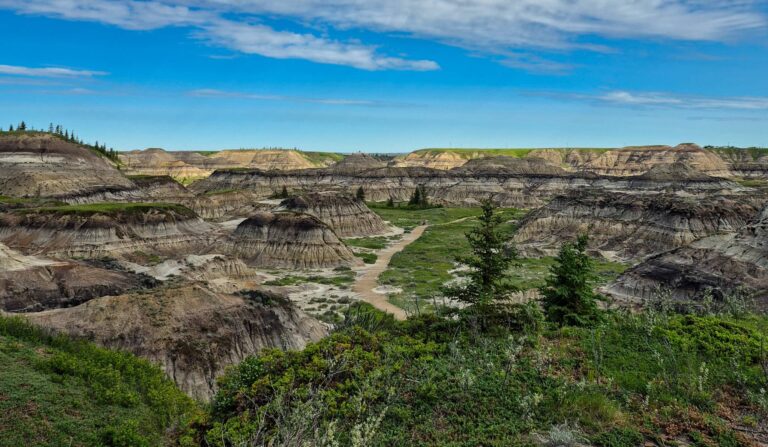
Drumheller, Alberta is called “The Dinosaur Capital of the World” for good reason! The Canadian Badlands are home to the highest concentration of late Cretaceous period dinosaur fossils in the world, and some of the most important fossil discoveries have been made in the area.
It only makes sense that Drumheller is also home to the Royal Tyrrell Museum of Palaeontology, which boasts the largest collection of dinosaur fossils in all of Canada. Many of the incredible fossil finds made in Alberta are on display within the museum’s walls. If you’re a fellow dinophile this museum needs to be on your bucket list!
Table of Contents
Royal Tyrrell Museum – Quick Guide
Short on time? Here is a mini guide to help you plan your trip to the museum
Location
- 1500 N Dinosaur Trail, Drumheller – Midland Provincial Park
- approximately 1.5 hours from Calgary
Hours
- Peak Season Hours
- May 15 – August 31
- Monday to Sunday
- 9am – 9pm (last entry 8pm)
- Off Season Hours
- September 1 – May 14
- Tuesday to Sunday- Closed Mondays except holiday Mondays
- 10am – 5pm (last entry 4pm)
Tickets
- Admission Fees
- $25 for adults (18-64)
- $16 for seniors (65+)
- $12 for youth (7-17)
- Free for children under 6
- Free for museum members
- Purchase your tickets and select your timed entry in advance
A Brief History of the Museum
The Badlands 75 Million Years Ago
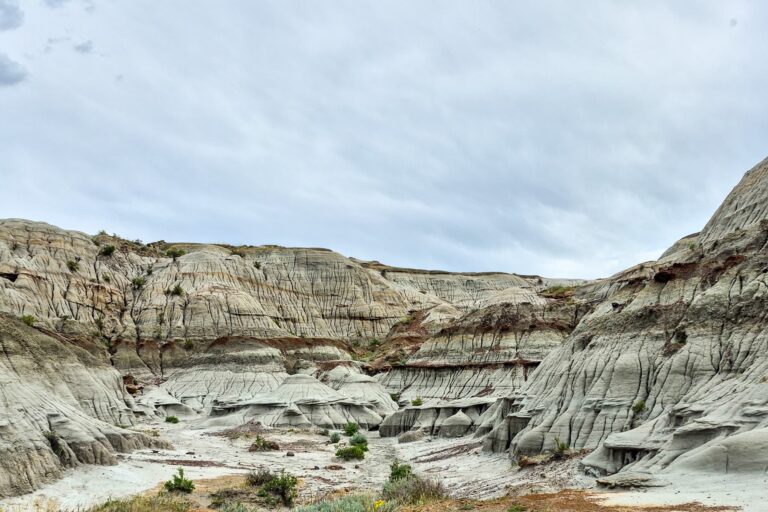
Although the Badlands today are known for being rocky, dry, and barren, the terrain was radically different 75 million years ago. Back then the Badlands were in a semi-tropical coastal plain climate, ideal conditions for thriving dinosaur life.
This climate was also fantastic for preserving dinosaurs in death. Many dinosaurs would die in seasonal flooding, and then be buried by layers and layers of sediment, eventually becoming fossilized. This is why the Canadian Badlands are so rich in dinosaur fossils.
Joseph Burr Tyrrell and the Great Canadian Dinosaur Rush
Fast forward millions of years and it was actually the Indigenous Blackfoot peoples that were first aware of dinosaur fossils in the region. They believe the large bones were from ancestors of the sacred buffalo. Word spread and fossil hunters were soon attracted to the region.
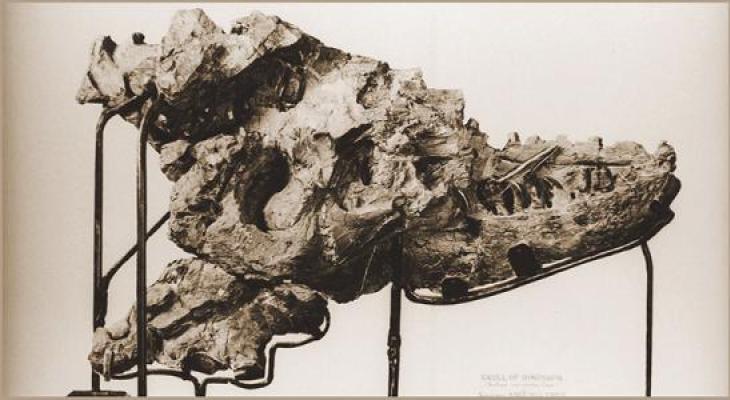
In 1884 Joseph Burr Tyrrell, a geologist at the Geological Survey of Canada (who was surveying coal deposits), found a 70 million year old dinosaur skull. This would eventually be dubbed Albertosaurus sarcophagus (“flesh-eating lizard from Alberta”) in 1905 by Henry Fairfield Osborn, a palaeontologist from the American Museum of Natural History.
Tyrrell’s find was seen as so significant that the museum was named in his honor when it opened in 1985. You can see Albertosaurus specimens inside the museum!
It would not be until the early 1900s however until the “Great Canadian Dinosaur Rush” would begin. During this period museums around the world were paying fossil hunters significant sums of money to collect dinosaur fossils for display in their museums. This period and later fossil finds would establish the Canadian Badlands as a premier dinosaur destination.
The Philip J. Curie Dinosaur Museum has a great article on the history of palaeontology in the Canadian Badlands.
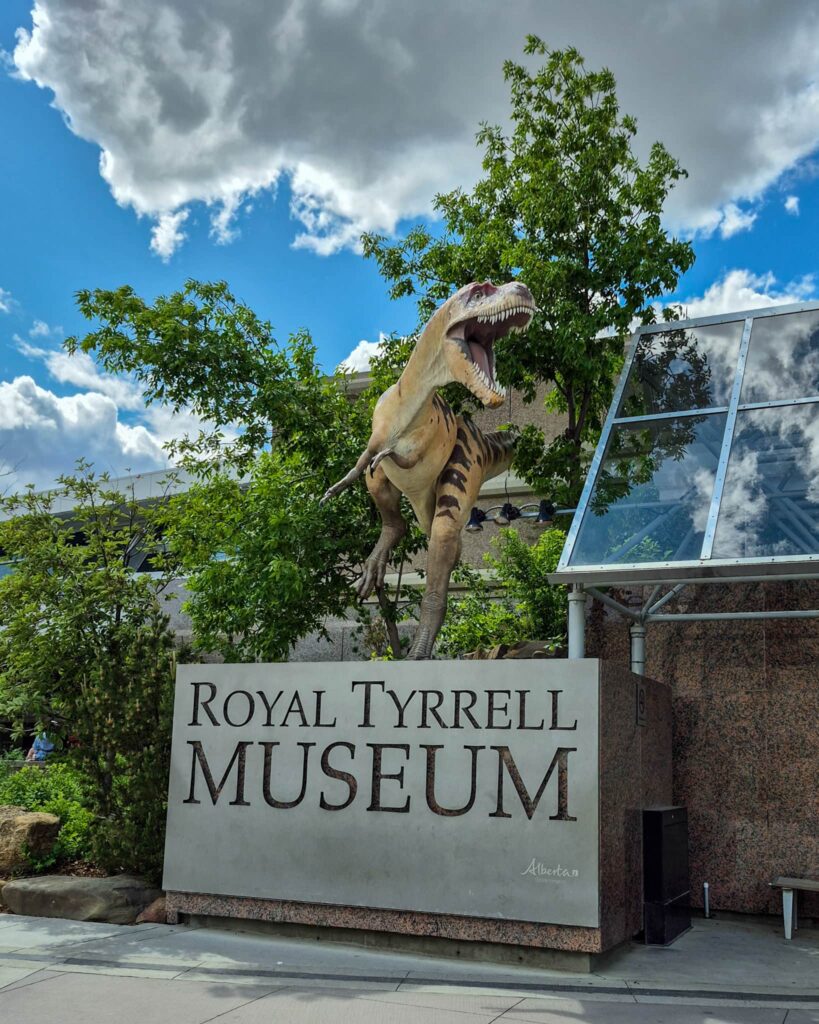
Visiting the Royal Tyrrell & Can’t Miss Exhibits
The Royal Tyrrell Museum is divided into two different areas. The first section focuses on specimens found in the province of Alberta, along with what the area looked like during the Cretaceous period, and a bit on the science of palaeontology.
The next section of the museum is called “Take a Journey Through Time” and focuses on Earth’s fossil record in chronological order. From the signs of first life in the Precambrian period (4.6 billion years ago), all the way to the Cenozoic Era (66 million years ago).
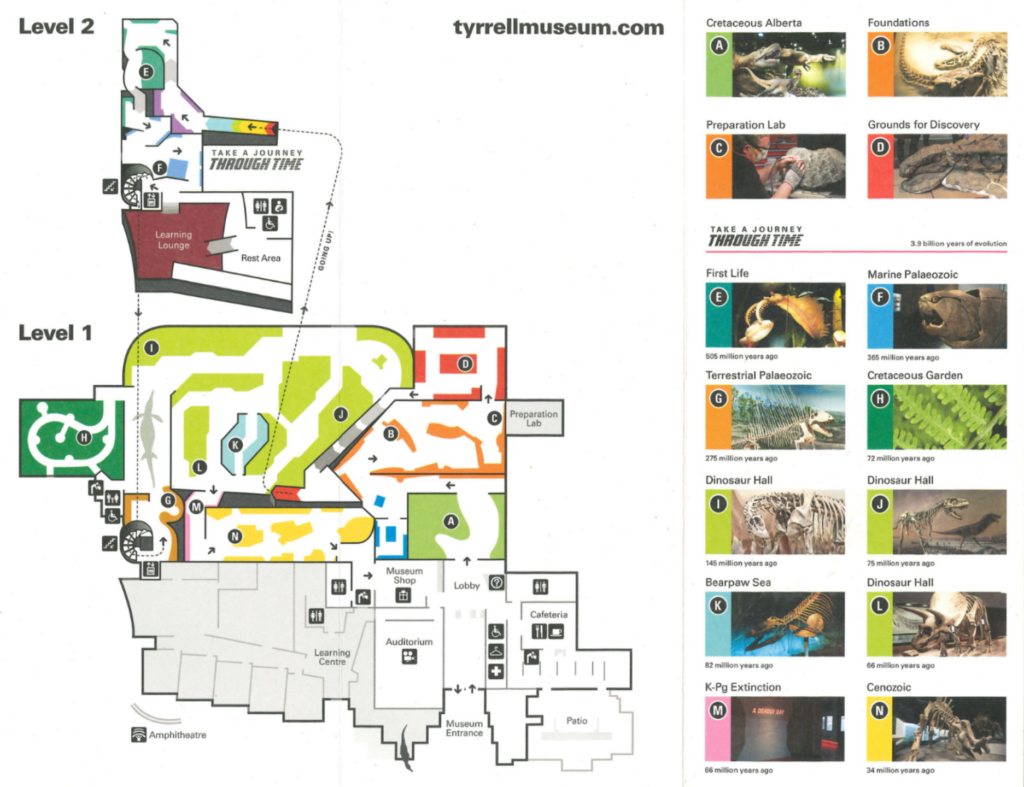
Here is a brief overview of all the different displays as you walk through the Royal Tyrrell Museum. As you can see in the map above, it is very easy to walk through the museum in its intended chronological order.
Cretaceous Alberta
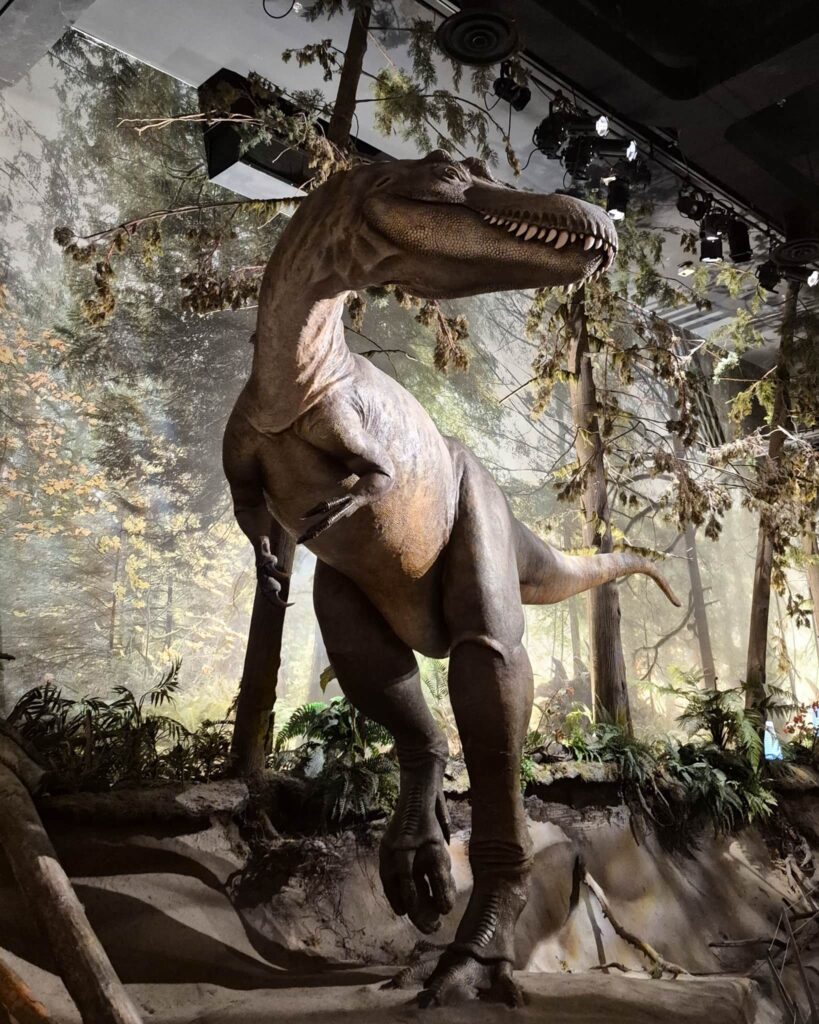
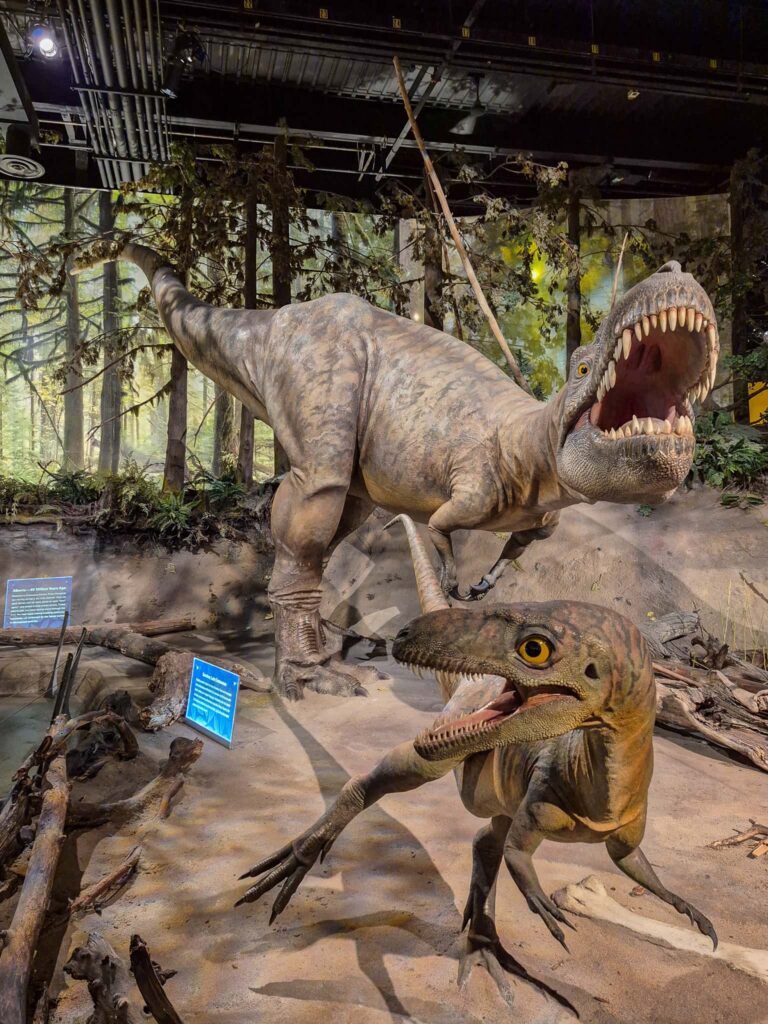
This exhibit displays models of a family of Albertosaurus as they would have lived 69 million years ago. The dinosaurs here aren’t skeletons, they look as they likely did when they were alive and instead of the barren Badlands terrain, they are surrounded by lush forests that existed during the Cretaceous period.
Museum scientists discovered a bonebed (mass grave) in Dry Island Buffalo Jump Provincial Park, where at least 12 Albertosaurus skeletons have been found, which provides the basis for this installation.
Fossils in Focus
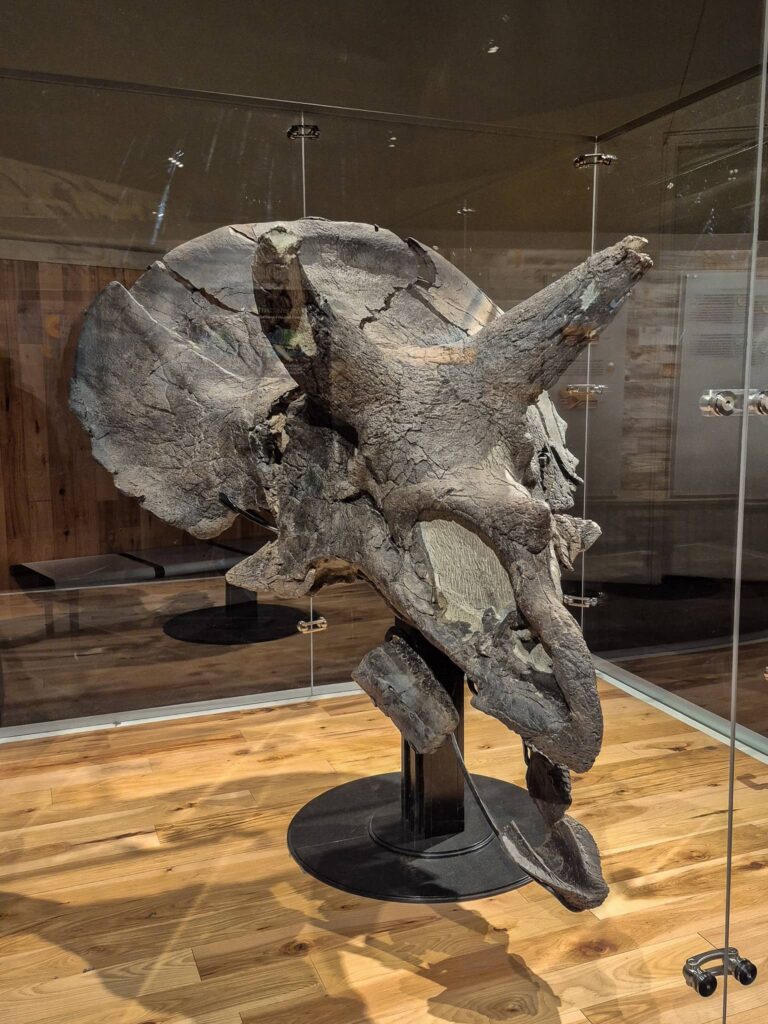
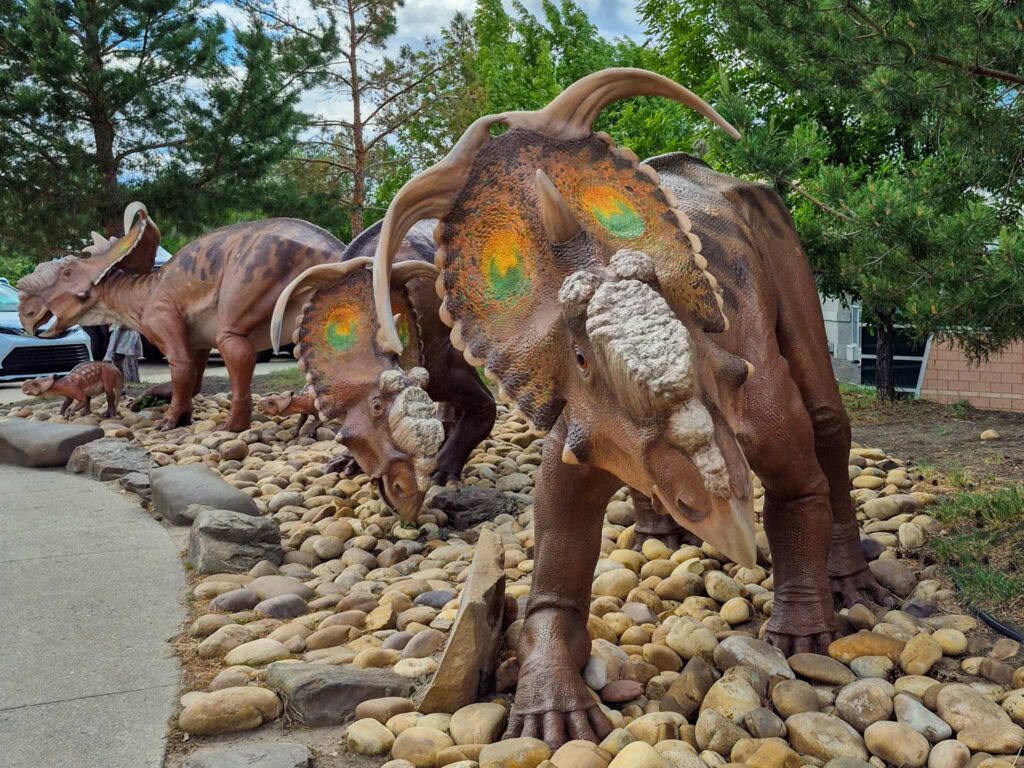
This area is dedicated to significant fossil finds in the Royal Tyrrell Museum’s collection. Here you can see the most complete Triceratops skull found in Canada!
Other displays here include bones with bite marks on them ,and even a turtle bonebed. Less than 1% of the Tyrrell’s collection is on display in the museum so you can imagine how important these particular displays are!
Foundations
This area discusses the study of palaeontology itself and the conditions that allowed for Alberta’s vast fossil finds. It also tells the story of life on Earth, so you’ll see a huge array of specimens from dinosaurs to early hominids.
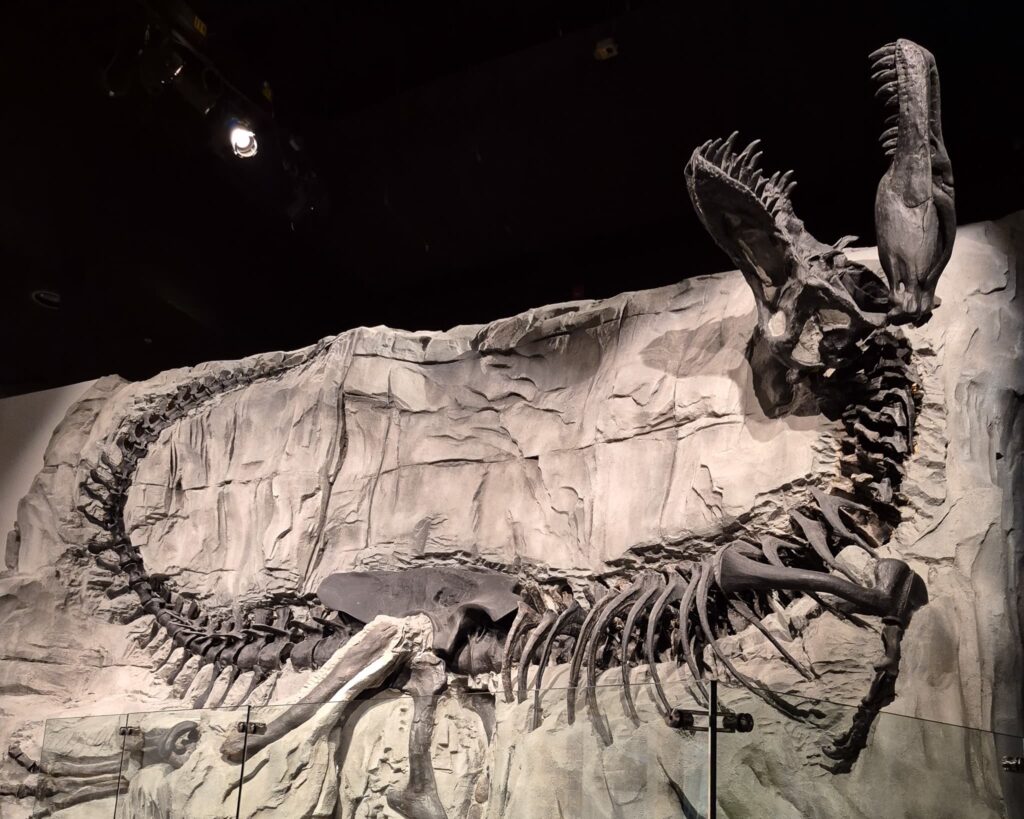
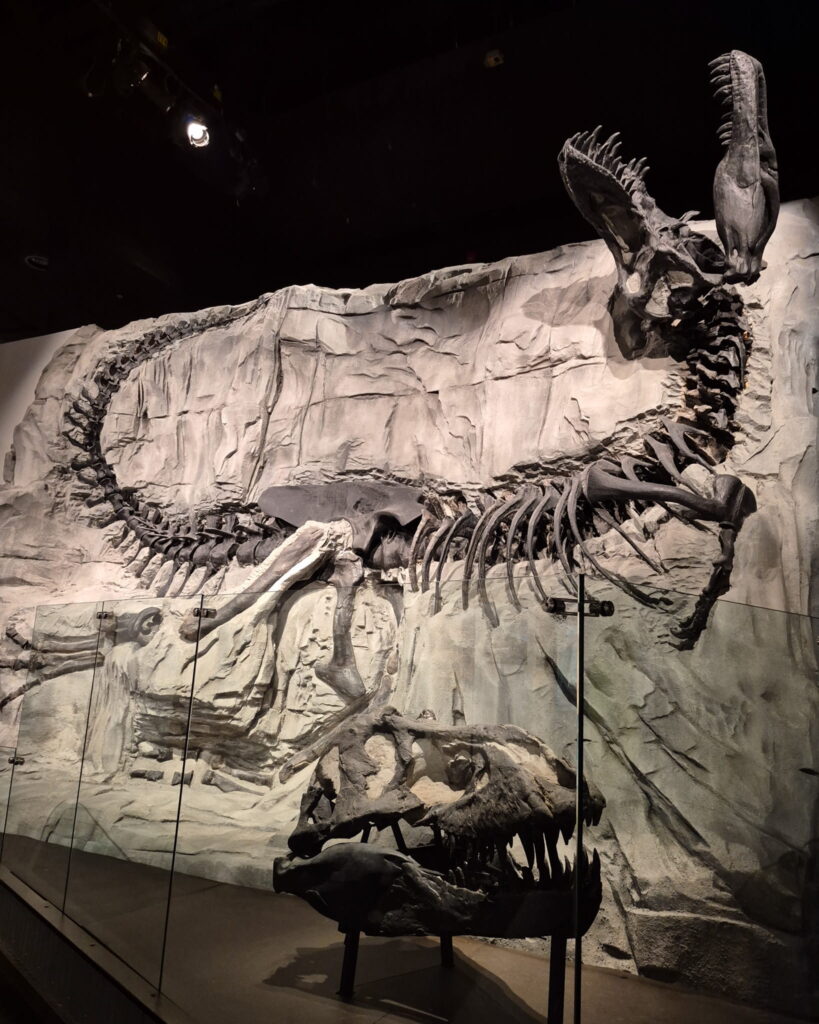
This is also where the museum keeps “Black Beauty”, one of the most complete tyrannosaurus rex skeletons ever found, and perhaps the Tyrrell’s most famous piece. It was discovered in 1981 by a group of teenage boys fishing near Crowsnest Pass, Alberta.
Black Beauty is displayed in the iconic death pose and her black bones come from the manganese present during the fossilization process.The actual skull of Black Beauty is on the floor in front of the skeleton, as it is too heavy to display with the rest of the T-Rex skeleton.
Preparation Lab
As you continue past Black Beauty, you’ll see a small area called the Preparation Lab. Here you can actually watch technicians prepare fossil specimens for research and display! New fossils are constantly being found and added to the museum’s collection.
Breakthroughs / Grounds for Discovery
This area of the Royal Tyrrell showcases five discoveries that completely changed our understanding of dinosaurs. This was my favourite area in the museum.
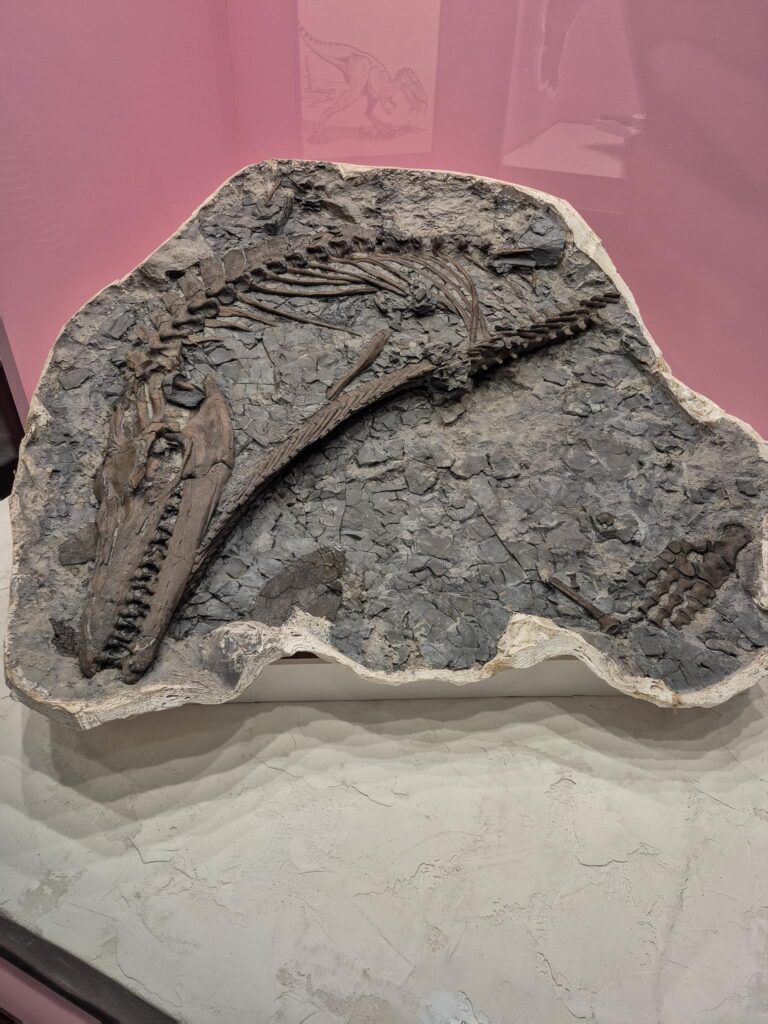
One of the displays features an aquatic species called Mosasaurus missouriensis that is so well-preserved you can see its cartilage and even the remains of its last meal of fish. Another shows an Ornithomimus with evidence of feathers on its arms. There’s also the nesting site in which dinosaur embryos belonging to Hypacrosaurus stebingeri were still preserved in their eggs and a Gorgosaurus libratus, a small tyrannosaur with prey still preserved in its digestive system.
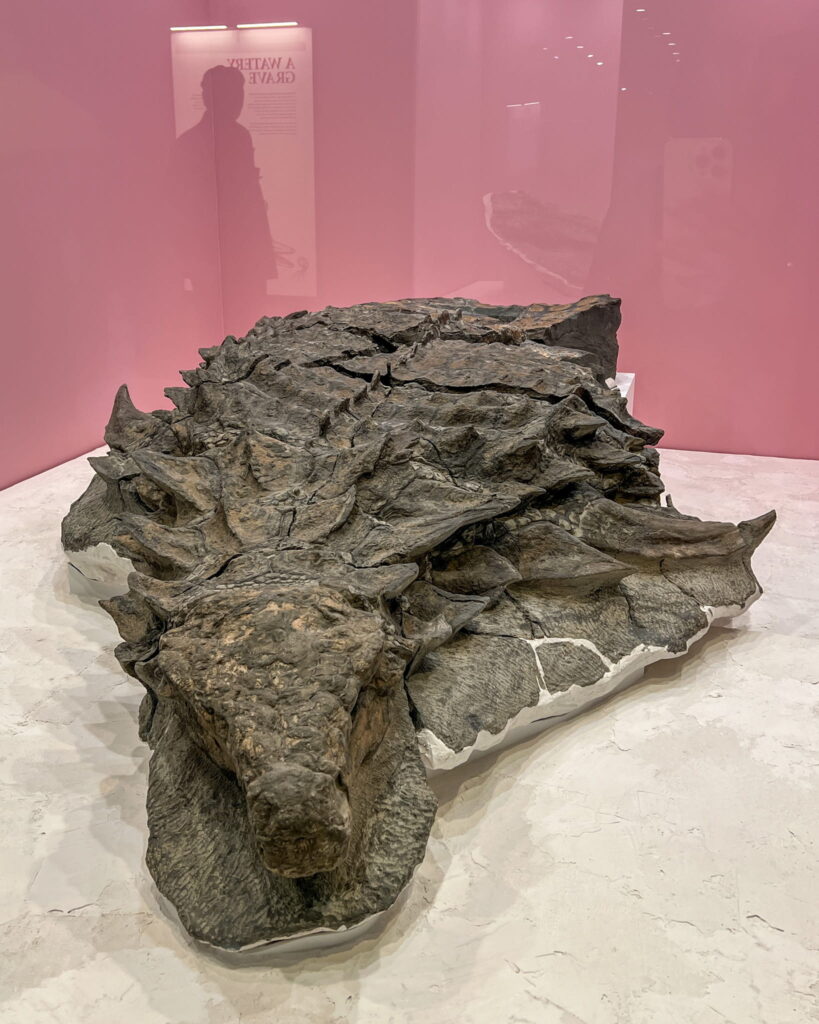
The absolute coolest part of this area, and maybe in the whole museum is Borealopelta markmitchelli, which is the world’s most well preserved armoured dinosaur! It was discovered in oilsands near Fort McMurray in 2011. It was named after Mark Mitchell who was the technician that spent over 6 years preparing the specimen. It’s also known as the Suncor Nodosaur, named after the oil and gas company that found it.
Take a Journey Through Time
First Life
After the Breakthroughs exhibit, the Royal Tyrrell transitions to following the chronological order of prehistoric eras, with specimens filling out each area and covering 3.9 billion years.
This section focuses on the Precambrian and Cambrian period, and how life diversified quickly during the Cambrian Explosion. Most of the specimens are from Burgess Shale, a 505 million year old fossil deposit in the Canadian Rockies of British Columbia. Much of these specimens still have their soft tissue preserved which is rare for fossils this old.
Palaeozoic Era
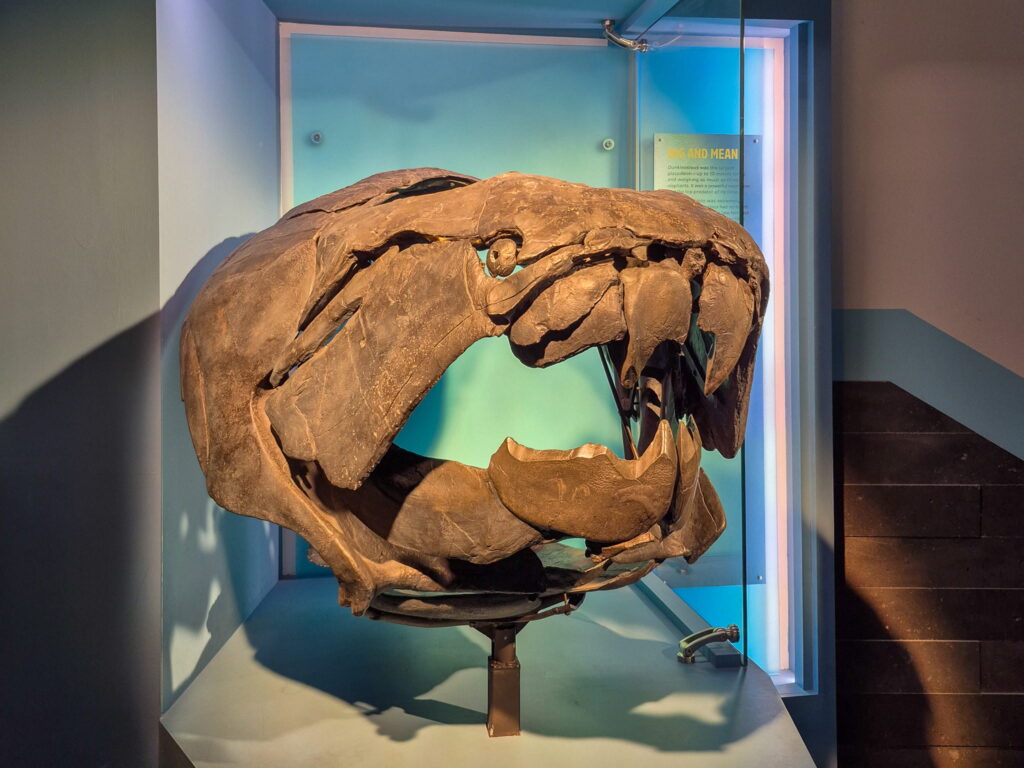
This section mainly showcases invertebrate specimens that evolved during the Palaeozoic Era. They originated in marine waters so most of these specimens are fish-like.
Learning Lounge
We skipped this section as there were so many children in here. But this area has lots of interactive displays and hands-on activities focused on Albertosaurus. It’s a good spot to check out if your children are getting a bit restless as it’s right at the halfway point of the museum.
Terrestrial Palaeozoic
Continuing on from the previous museum era, this section also focuses on the Palaeozoic but instead of the aquatic invertebrates you’ll see the first species on land. There was a mass extinction event called the Great Dying which marks the period between the Palaeozoic and Mesozoic eras.
Triassic Giant
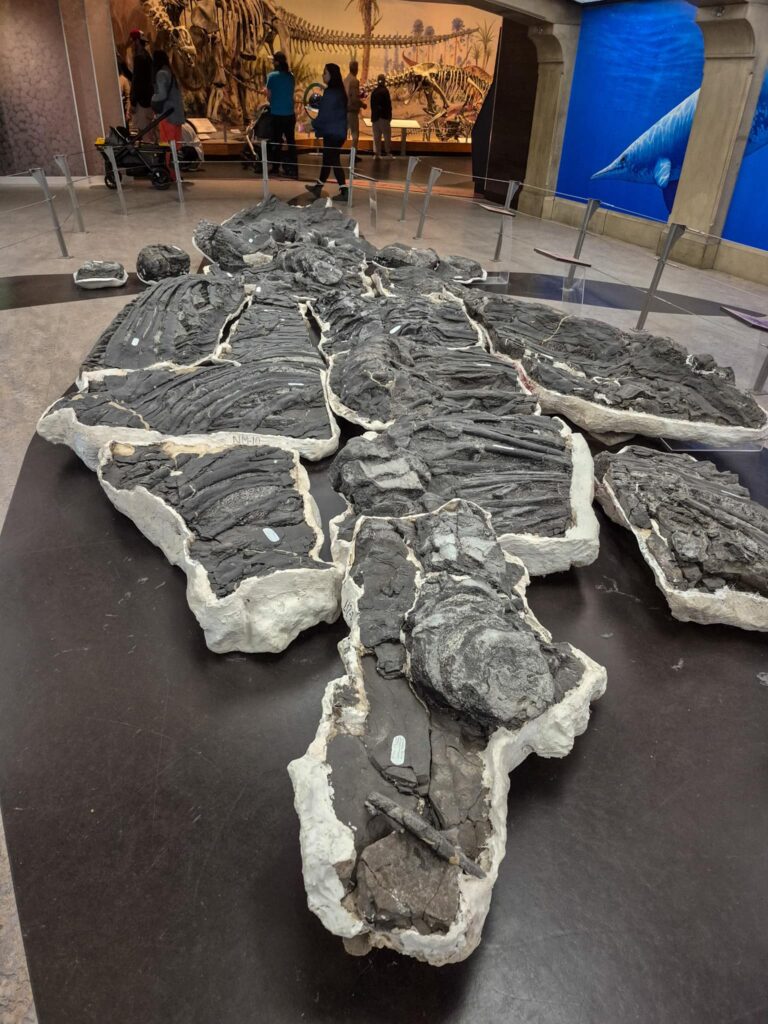
This exhibit showcases an ichthyosaur called Shonisaurus sikanniensis, the world’s largest marine reptile. It’s 21m long and takes up most of the room! The specimen here was discovered in 1990 on the banks of the Sikanni Chief River in British Columbia.
Cretaceous Garden
This small area offers another respite from the museum. This is a humid garden with modern plant species that are living relatives of the plant life that grew in Alberta during the Cretaceous period. So strolling through here gives you an idea of what the dinosaurs experienced during their lifetimes.
Dinosaur Hall
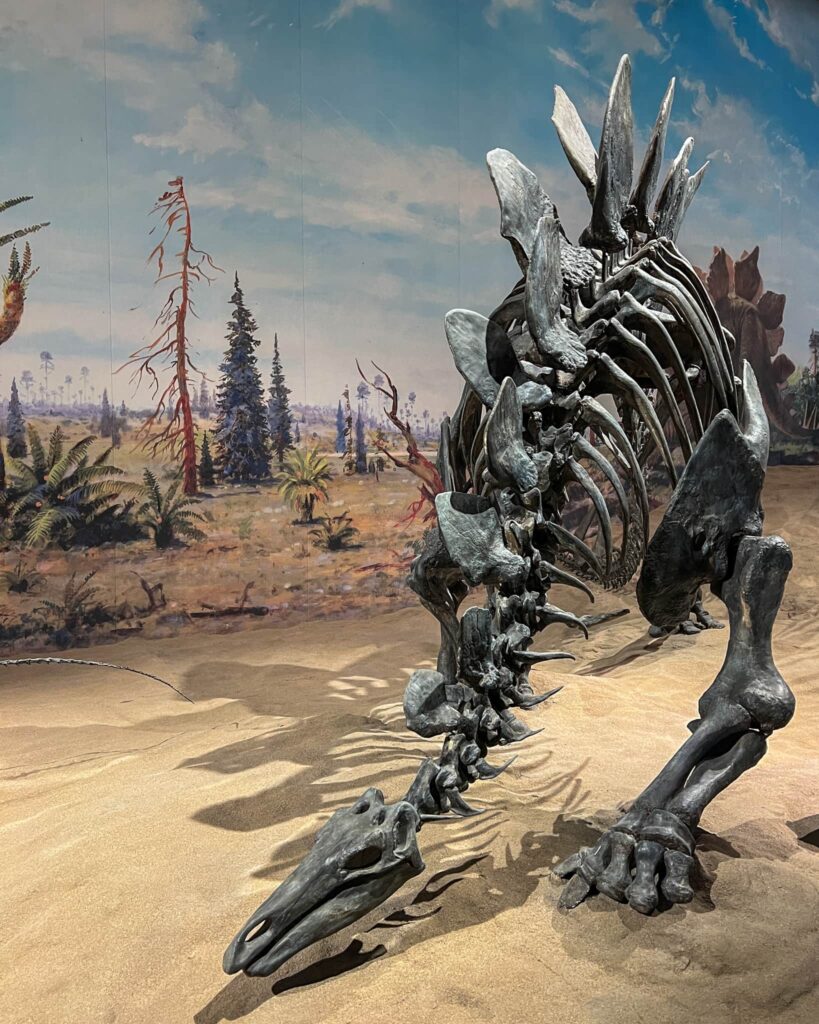
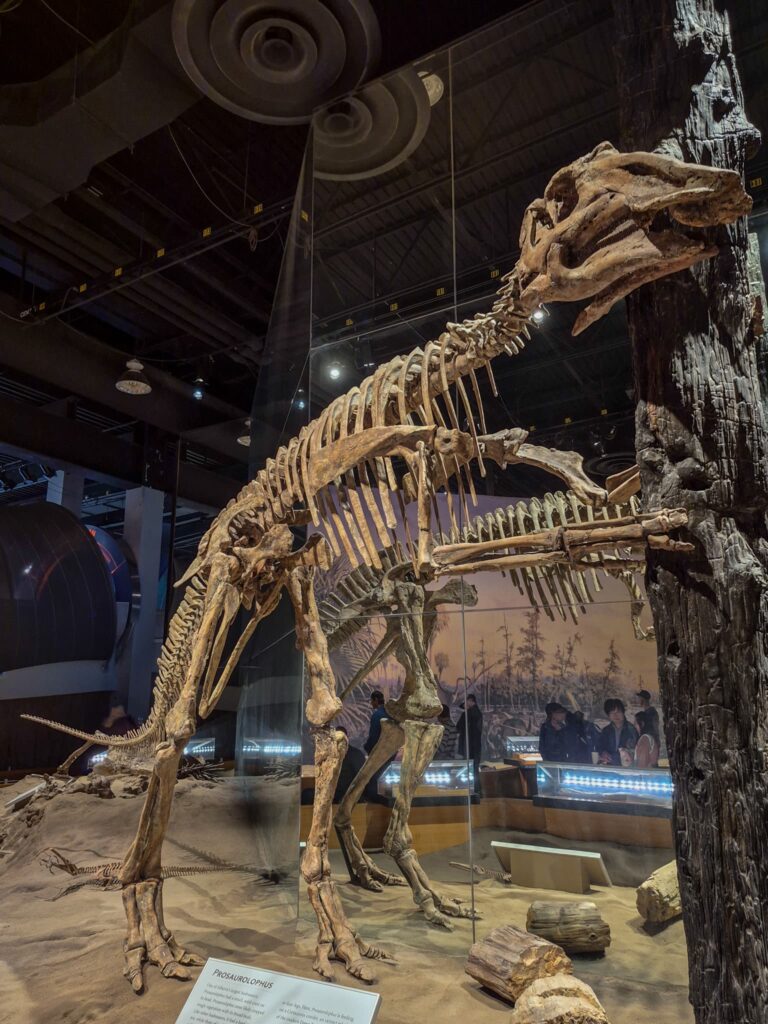
Next you’ll be in a large section called the Dinosaur Hall, which features multiple dinosaur remains. Most of the dinosaurs on display here all full cast skeletons, so it’s very imposing walking amongst them!
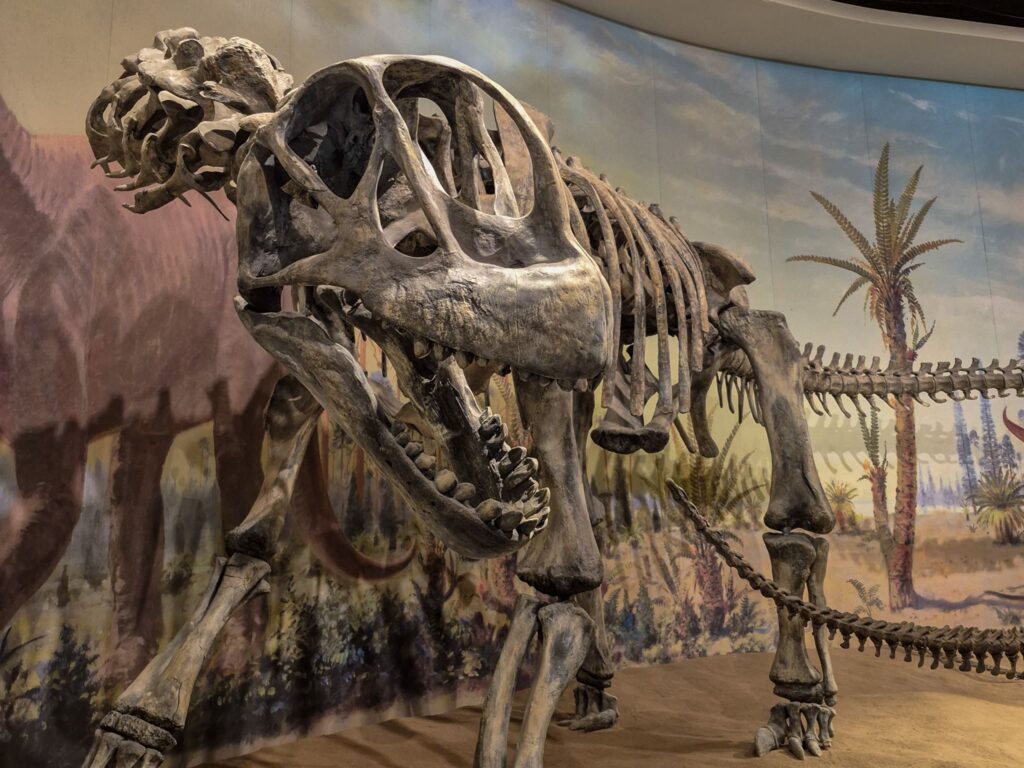
This is another favourite section of mine and it focuses more on the different dinosaur species as a whole compared to the specific discoveries earlier. In this section you’ll see all the most famous dinosaurs like triceratops, stegosaurus, hadrosaurs, and of course the mighty tyrannosaurus rex!
There are multiple subsections of the Dinosaur Hall. There is a section with dinosaurs from 145 million years ago, ones from 75 million years ago, a subsection called the Bearpaw Sea with marine specimens 82 million years ago, and another section of the Dinosaur Hall from 66 million years ago.
K-Pg Extinction
This is a very small section that discusses theories on why the dinosaurs went through a mass extinction event 66 million years ago. The K-Pg extinction event is also called the Cretaceous-Paleogene extinction event, and this is when 3 quarters of plant and animal life went extinct.
It marked the end of the Mesozoic Era and the beginning of the Cenozoic Era. The most widely accepted theory was the impact of a massive asteroid which would have caused a lingering winter where most life would have been unable to survive.
Cenozoic Gallery
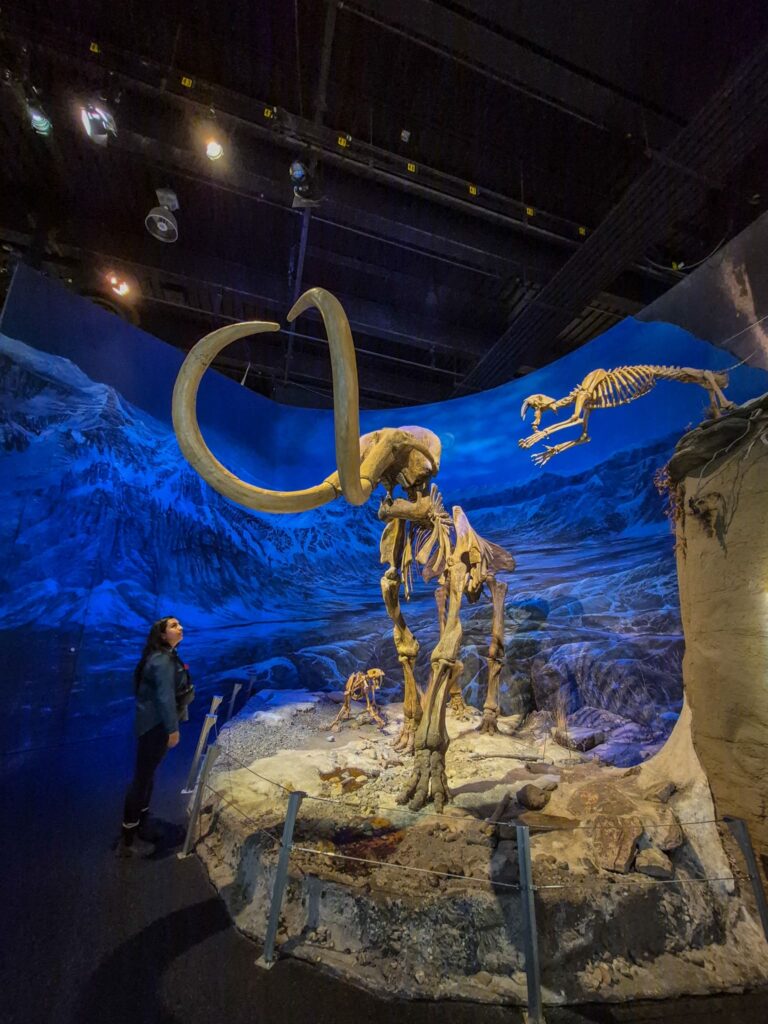
The last section of the museum focuses on the Cenozoic Era which is known as the “Age of Mammals”. While there were some small mammals that lived during the time of the dinosaurs, mammal species and populations expanded immensely after the mass extinction of the dinosaurs 66 million years ago.
You’ll see many different types of extinct mammals throughout the exhibit, including famous Ice Age mammals like the wooly mammoth and the saber-toothed tiger.
Badlands Interpretive Trail
Once you’re finished exploring the inside of the museum, just know there’s more to see outside! Right in front of the museum is the Badlands Interpretive Trail.
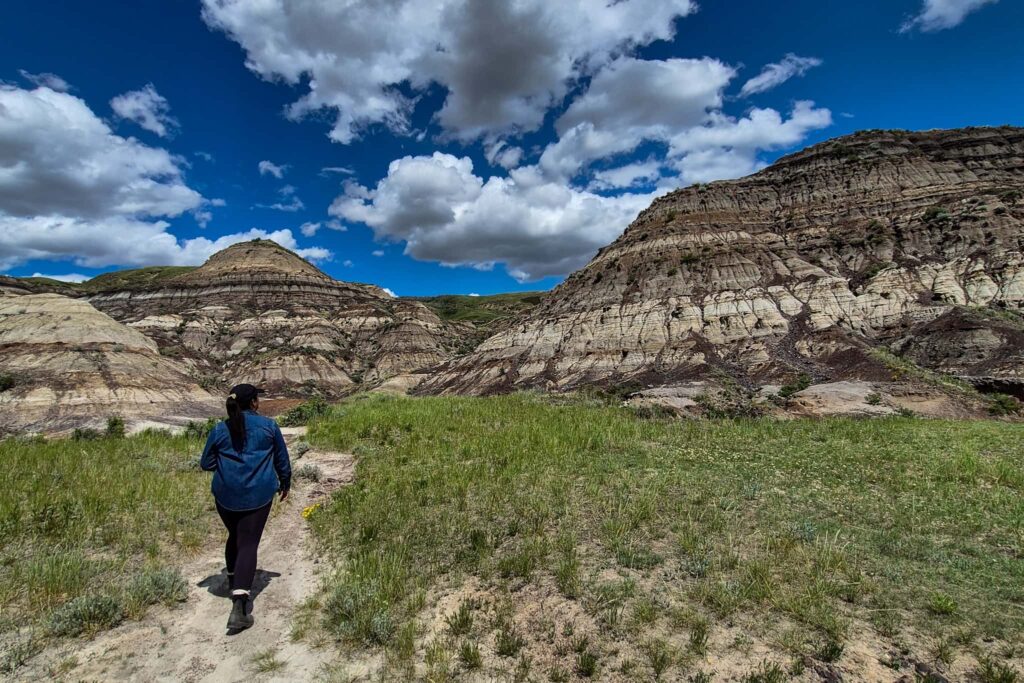
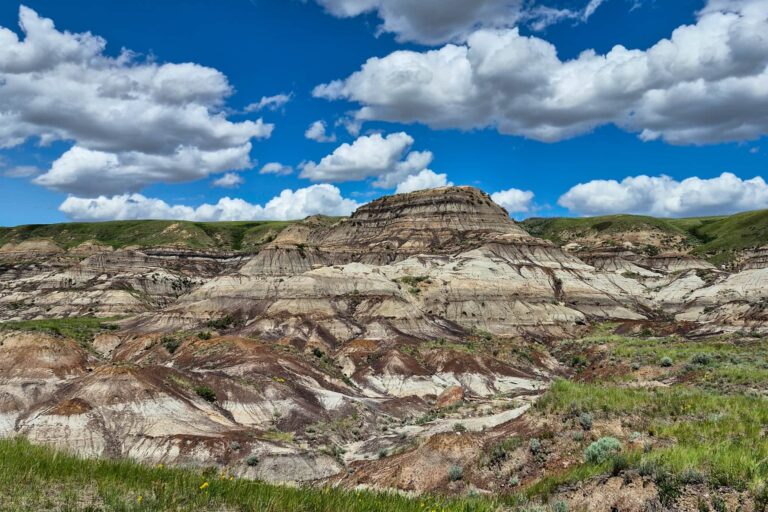
This is a short 1.4km loop through some Badlands terrain. Along the way you’ll see some small hoodoos, and on the interpretive panels you’ll learn even more about the geology of the area. There are lots of nice lookout points into the small valleys below.
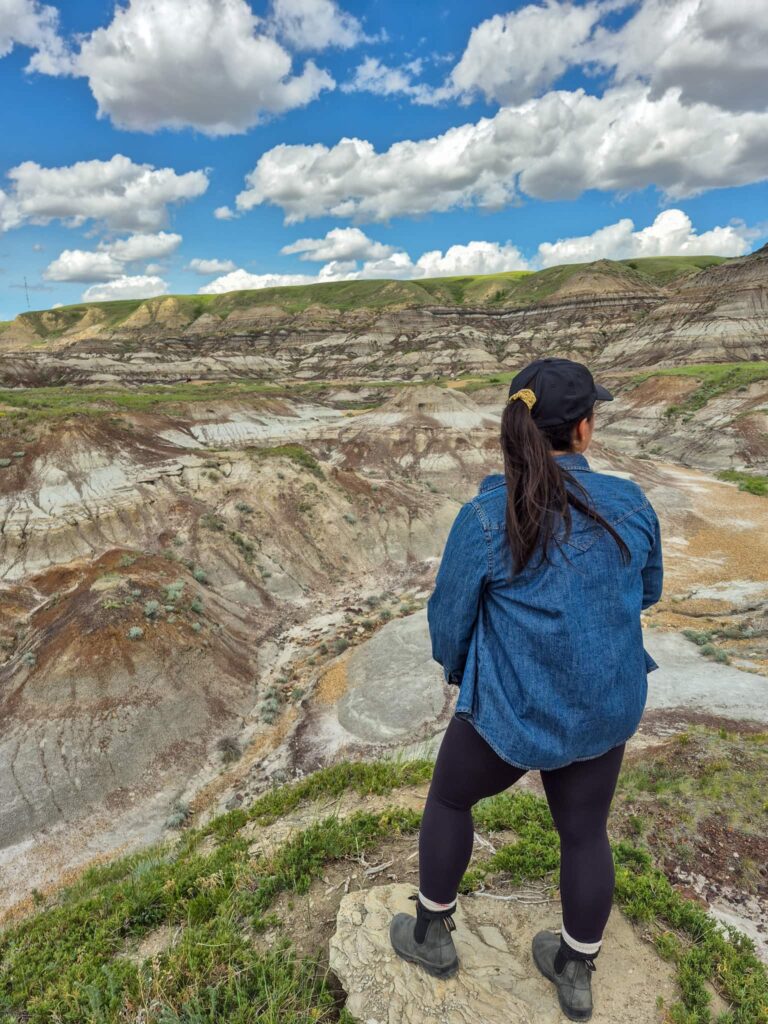
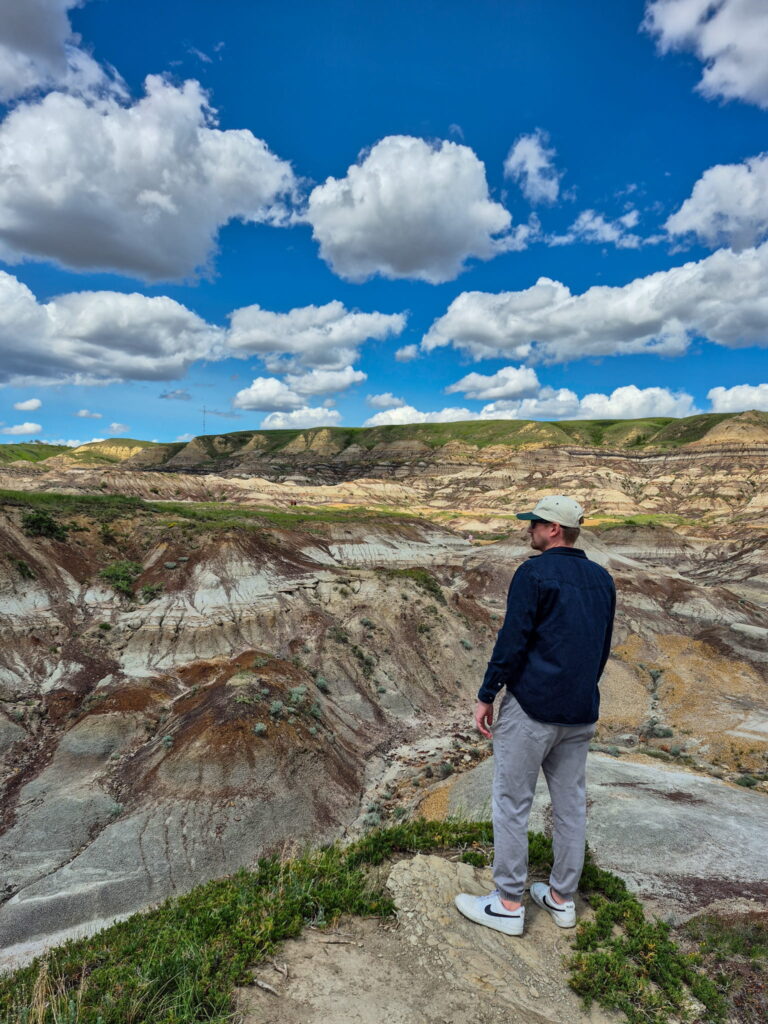
As always, please stay on the trail and do not touch the hoodoos to prevent further erosion. Badlands terrain is extremely susceptible to erosion.
Just in front of the trail you’ll see a small hill that you can climb for a nice view overlooking the Royal Tyrrell Museum and the Badlands.
Other Amenities at the Museum
Museum App
There is a free app for the Royal Tyrrell Museum that you can download from the Apple Store. It seems like there is only an iOS app. It takes you through the galleries via an audio tour, and you can listen in English or French, Spanish, German, Chinese (Simplified), and Japanese.
Guided Tours
While the Royal Tyrrell does not offer guided tours of the museum itself, you can do a guided hike or dig experience with museum staff.
Museum Shop
There’s a fantastic gift shop in the Royal Tyrrell Museum filled with all sorts of souvenirs like toys, clothing, books, and other knick knacks. You can also check out all their merchandise online.
Dining
There is a large cafeteria at the Royal Tyrrell Museum. You can eat indoors or on the patio during the summer time. We only got drinks, but expect grill and deli type food offerings.
FAQs
What is the best time to visit the Royal Tyrrell Museum?
The Royal Tyrrell Museum is open year round, so you can go at any time of year.
Most people visit Drumheller from May to October. We went on a Sunday afternoon in early June and we did not find the museum to be overly busy. July and August would be much busier.
During the peak summer season, the museum is open every day from 9pm to 9pm, with the last entry at 8pm.
In the off season the museum is closed on Monday (except for holidays) and is open from 10am to 5pm, with the last entry at 4pm.
For the 2026 season, the museum will be closed December 21, 24, 25, and 28, 2026 and January 1, 2027.
How much time to spend at the museum?
You could absolutely spend an entire day at the Royal Tyrrell depending on how much you like dinosaurs, and if you do some sort of guided tour.
We spent 3 hours at the museum, including hiking the Badlands Interpretive Trail. I found this to be plenty of time but we did not read every single exhibit in the museum. The museum itself suggests 2 hours at minimum for a visit.
What are the admission costs to the museum?
It is best to purchase tickets to the museum in advance online as they are offered on a timed entry basis.
If you’re eligible for discounted tickets, you would purchase them at full price in advance, and then receive a refund upon arriving at the museum.
These are the current admission fees to the Royal Tyrrell Museum for 2026.
Admission Fees
- $25 for adults (18-64)
- $16 for seniors (65+)
- $12 for youth (7-17)
- Free for children under 6
- Free for museum members
The Royal Tyrrell Museum is participating in the Canada Strong Pass this summer. So from June 19 – September 8, 2026 tickets for people aged 18-24 will be $12.50 and all children under 17 will get free tickets during this period.
Does the museum have parking?
The Royal Tyrrell has a big parking lot and parking at the museum is free! They have spaces for cars, in addition to parking for buses and trailers. This is great if you’re planning on camping in the area and your site is not ready for check-in.
Is the museum accessible?
The exhibits at the Royal Tyrrell Museum are all wheelchair accessible. Both floors are accessible via elevator and a wheelchair ramp. There are also accessible washrooms.
If needed you can also rent a manual wheelchair from the Visitor Services Desk for $3. You can rent a stroller for the same price.
There is a courtesy shuttle between the parking lot and museum entrance for those with limited mobility during the summer months.
Service dogs are permitted in the museum, and pets are allowed on the trails within Midland Provincial Park.
How to get to the Royal Tyrrell Museum from Calgary?
From Calgary, the Royal Tyrrell Museum is about a 1.5 hour drive. It is located right in the Canadian Badlands inside of Midland Provincial Park, just outside of the city of Drumheller.
Most people end up taking Highway 9 into Drumheller, and then the museum is just 6km from the town.
Here’s the exact location in Google Maps!
Is this a day trip or should I stay in Drumheller?
While the Royal Tyrrell Museum could absolutely be done as a day trip from Calgary or other nearby cities in Alberta, I do suggest spending a few days in Drumheller.
Check out my 2 Day Drumheller itinerary, or my 5 Day Canadian Badlands itinerary which also covers Dinosaur Provincial Park, for ideas of what to see in and around Drumheller!
Can you visit the Royal Tyrrell Museum and Dinosaur Provincial Park on the same day?
In theory you could, but I would advise against it as it would likely be a jam-packed day. The Royal Tyrrell Museum is a 2 hour drive from Dinosaur Provincial Park. Even if you only spent the morning at the museum before driving to the provincial park, I don’t believe you’d have the time to fully appreciate each destination.
I’d spend at least one full day visiting Dinosaur Provincial Park like we did, and you could even spend more if you plan on doing any of the guided hikes or excavations in Dinosaur.
Do I need to contact the museum if I find a fossil?
Yes, under Alberta law, all fossils are owned by the Alberta government, and it is illegal to excavate them without a permit. There is a procedure to follow where you can report finds to the Royal Tyrrell Museum.
Final Thoughts
We had an amazing few hours exploring the Royal Tyrrell Museum and it was a great starting point for learning about the Badlands and all of the dinosaur finds in the area.
If you’re planning on continuing to Dinosaur Provincial Park, I’d highly suggest visiting the Tyrrell first because of how many finds from Dinosaur are now featured in the museum.
The Royal Tyrrell Museum is a must do pilgrimage to dinosaur lovers and make sure to check out even more dinosaur activities in and around Drumheller.